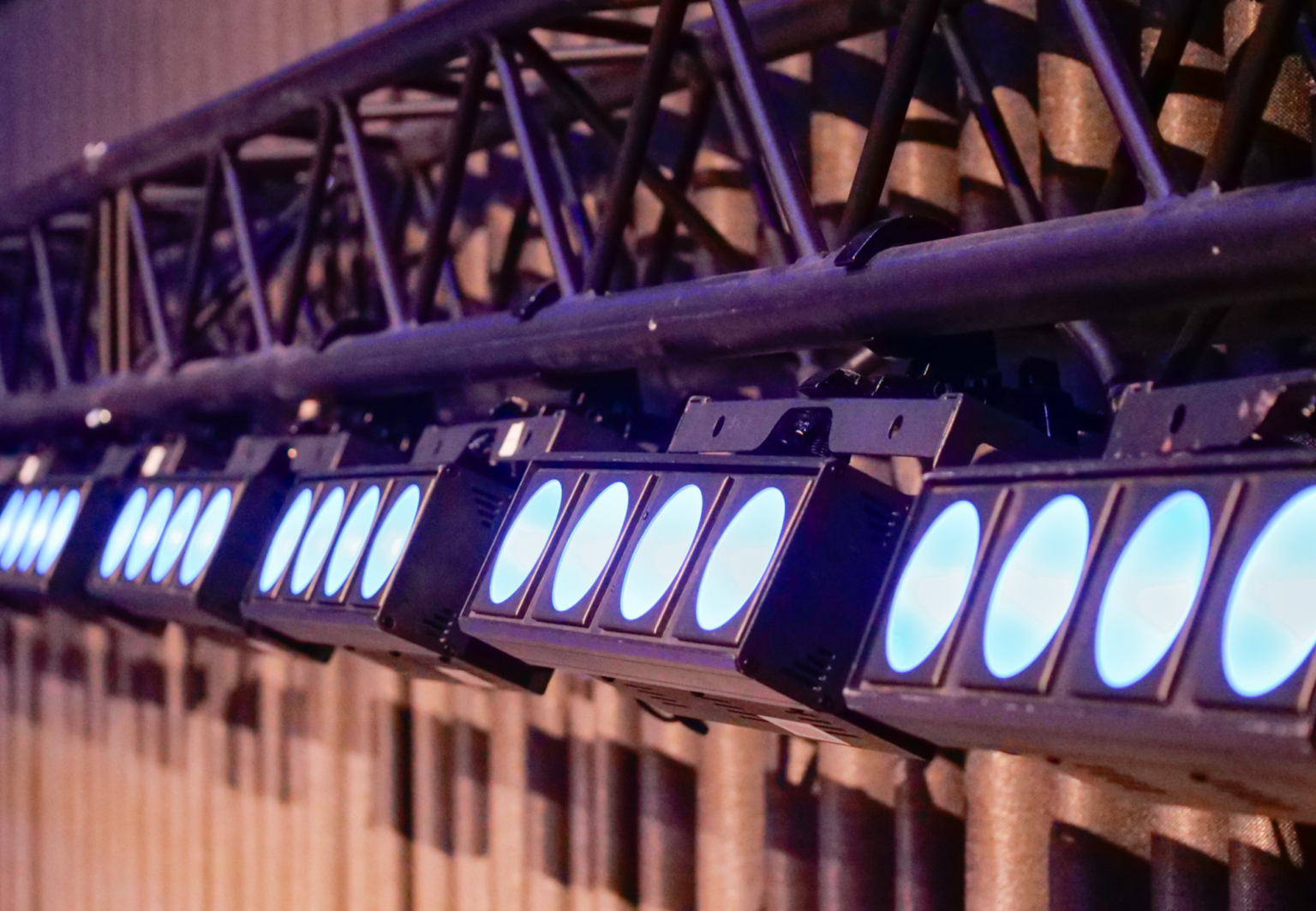
The venue keeps energy consumption in its main halls deliberately low, uses LED screens and LED lighting as the default, and sources its electricity through a green-power contract — with a phased investment plan under way to complete the switch to full LED integration.
LED technology consumes a fraction of the power of traditional stage and hall lighting and produces far less residual heat, which lowers the cooling load on the building. Generators have been eliminated from the operation, meaning no diesel consumption or local emissions on-site. For organisers, this translates into an event that runs on verified green electricity from the moment of arrival, without additional supplier coordination.
This approach is part of the venue’s broader sustainability strategy, aligned with the United Nations Sustainable Development Goals.
Sustainability added value: By combining low-consumption halls, LED as the standard, a generator-free operation and a green-power contract, the venue turns event energy — usually one of the sector’s biggest hidden footprints — into a visible and continually improving asset, with each phase of the LED roll-out further reducing the environmental impact of every event hosted.