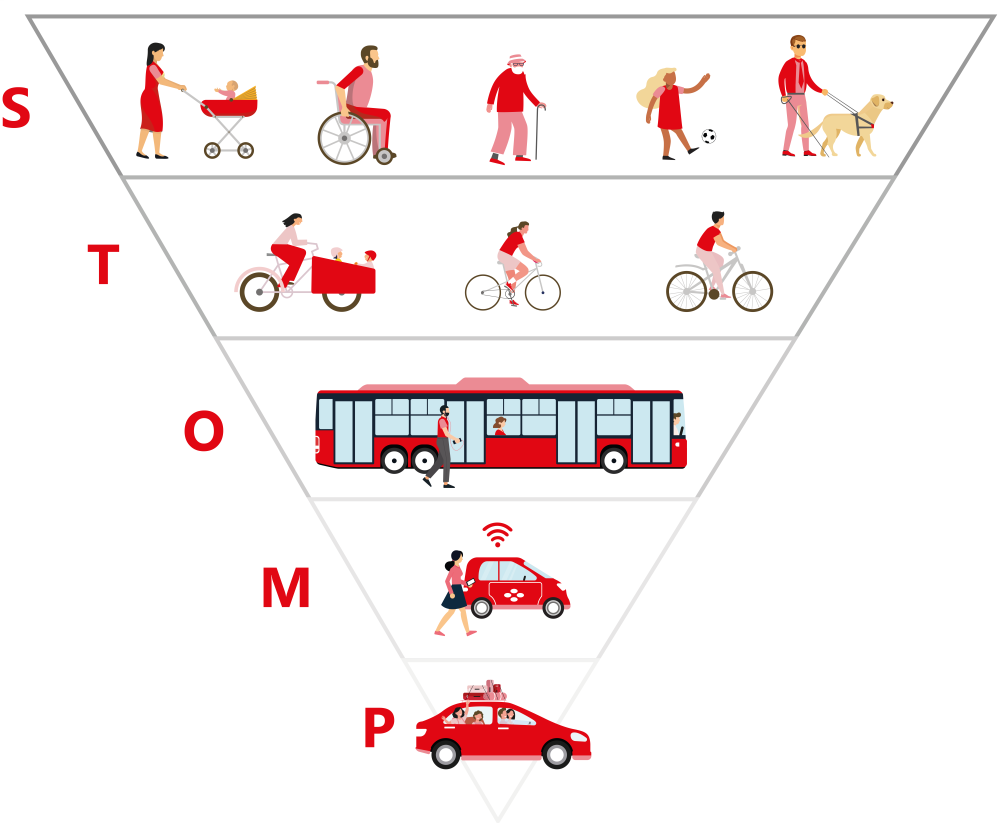
To encourage sustainable travel to the event, the STOMP principle was applied — a mobility hierarchy that prioritises modes of transport in the following order: Stepping (walking), Trapping (cycling), Openbaar vervoer (public transport), Maatschappelijk verkeer (shared mobility such as car-sharing and shared scooters), and Private car (as a last resort). Rather than starting mobility planning with car parking, STOMP shifts the focus to how attendees can realistically arrive on foot, by bike or via public transport. This translates into practical applications across four areas: providing spacious and safe bicycle parking facilities; actively communicating cycling routes and public transport connections in event promotions; choosing event locations that are well-served by walking, cycling and public transport; and deploying shared mobility solutions such as shared bikes or shuttle buses from the nearest station.
Sustainability added value: Applying the STOMP principle fundamentally reframes how mobility is planned for an event — putting the lowest-emission options first and making sustainable travel the path of least resistance for attendees. By embedding this hierarchy into location choice, communication and on-site facilities, the organiser reduces the event’s transport footprint structurally, rather than simply hoping attendees will make greener choices on their own.